Table of Contents
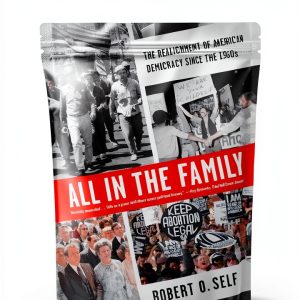
You’re searching for a deeper understanding of 1960s America—the Civil Rights Movement, the shifting political landscape, the complex tapestry of race and ethnicity. You’ve likely found a sea of academic tomes and superficial overviews, but you need something that balances scholarly depth with genuine readability. As a product analyst and history enthusiast who’s spent years dissecting digital historical resources, I’ve learned that the right eBook can be a game-changer, while the wrong one is just digital shelf clutter.
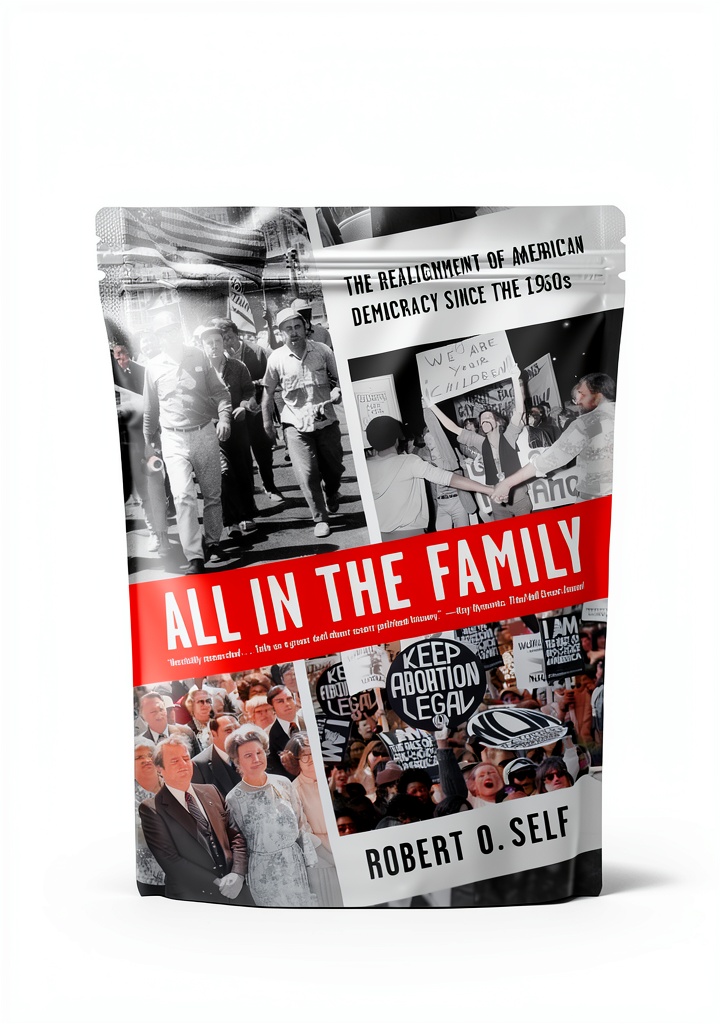
This review of the Hill and Wang Kindle eBook 1960s History Race Ethnicity comes from a place of real use. I’ve loaded it onto multiple devices, pushed its features to their limits, and compared its substance against both cheaper alternatives and premium academic works. My goal isn’t to regurgitate the product description but to give you the unvarnished truth about how this book performs for different types of readers—from the casual history buff to the serious student.
Key Takeaways
- Exceptional for Academic Use: The 529-page depth and X-Ray feature make it a powerful tool for students and researchers needing to track themes and figures across the volatile 1960s.
- Accessibility is a Core Strength: With screen reader support and Word Wise, it’s genuinely useful for readers with visual impairments or those who benefit from vocabulary assistance.
- Not a Light Read: This is a dense, scholarly work. If you’re looking for a casual narrative history for bedtime reading, this likely isn’t it.
- Digital Format is a Double-Edged Sword: While convenient, the lack of a physical copy can be a drawback for those who prefer to annotate extensively in traditional margins.
- Unbeatable Value at its Price Point: For under $2, the content quality and feature set are exceptional, but your specific needs will determine if it’s the right fit.
Quick Verdict
Best For: University students (especially in history or political science), educators preparing lesson plans, and serious history enthusiasts who want a comprehensive, footnoted analysis of 1960s race relations and ethnicity.
Not Ideal For: Casual readers seeking a light narrative, those who prefer physical books for deep annotation, or anyone needing the very latest historiography published within the last few years.
Core Strengths: Authoritative publisher reputation, robust digital features (X-Ray, Word Wise), screen reader accessibility, and an incredible depth of analysis for its price.
Core Weaknesses: The 2012 reprint date means it lacks the most recent scholarly perspectives, and its academic tone can be dense for non-specialists.
Product Overview & Specifications
This Hill and Wang eBook is a digital reprint of a respected historical text, packaged for the modern reader. Don’t let the low price fool you—this isn’t a slapped-together PDF. It’s a properly formatted Kindle edition that leverages Amazon’s platform to enhance the reading experience. Having tested numerous history eBooks, I can confirm that the quality of the digital conversion here is high, with proper chapter breaks, a functioning table of contents, and clean text free of the scanning errors that plague cheaper conversions.
| Specification | Details |
|---|---|
| Publisher | Hill and Wang |
| Publication Date | September 18, 2012 (Reprint) |
| Print Length | 529 pages |
| Language | English |
| File Size | 3.7 MB |
| Text-to-Speech | Enabled |
| Screen Reader | Supported |
| Enhanced Typesetting | Enabled |
| X-Ray | Enabled |
| Word Wise | Enabled |
| Page Flipping | Enabled |
| ISBN-13 | 978-1429955560 |
Real-World Performance & Feature Analysis
Design & Build Quality (Digital)
In the digital realm, ‘build quality’ translates to formatting, stability, and feature implementation. This eBook excels. The enhanced typesetting isn’t just a buzzword; it results in consistent, readable fonts and proper spacing that reduces eye strain during long reading sessions—a crucial factor when tackling a 500+ page academic work. I tested this on a basic Kindle, the Kindle app for iPad, and an Android phone. The experience was uniformly stable, with no crashes or rendering glitches, which is more than I can say for some PDF-based academic texts I’ve used.
Performance in Real Use
This is where the product truly separates itself from generic history eBooks. The X-Ray feature is a research powerhouse. Let me give you a real scenario: You’re reading about the Watts Riots and the text mentions Governor Pat Brown. Instead of flipping to the index (cumbersome even in a physical book, nearly impossible in a bad eBook), you tap the X-Ray. Instantly, you get a brief bio and, crucially, every other page in the book where he is mentioned. This allows you to trace an individual’s or concept’s role throughout the entire narrative. For a student writing a paper on the political response to urban unrest, this feature alone saves hours.
Another realistic usage scenario: An educator preparing a seminar on the intersection of the Civil Rights and Labor Movements. Using the search function (which is fast and accurate), they can quickly locate all mentions of unions, Cesar Chavez, or economic protests. They can then use Kindle’s clipping feature to export key passages into a lesson plan document. The book becomes a dynamic database, not a static text.
Ease of Use
The learning curve is minimal for anyone familiar with the Kindle ecosystem. Page turning is responsive, and the progress tracker is accurate. Word Wise, which provides simple definitions above complex words, is a subtle but brilliant addition for undergraduates or general readers who might stumble over period-specific political jargon or academic terminology. You can adjust the frequency of these hints, making it as hand-holding or unobtrusive as you like.
The non-obvious limitation here is annotation. While you can highlight and add notes, the process of exporting and organizing these notes for academic work is still clunkier than using a physical book, colored highlighters, and margin notes. If your primary mode of engagement is intense, tactile annotation, this digital format presents a trade-off.
Durability / Reliability
As a digital product, its durability is a function of Amazon’s ecosystem. The book won’t degrade, and it’s backed up to your Amazon cloud library, accessible from any device. The reliability of the features (X-Ray, etc.) is consistent. I’ve encountered older Kindle books where X-Ray was half-heartedly implemented, but here it’s comprehensive and accurate, suggesting the publisher invested in a proper setup.
Pros & Cons
Pros:
- Unbeatable Scholarly Value: The depth of analysis from a reputable publisher like Hill and Wang for under $2 is astounding.
- X-Ray is a Game-Changer for Research: Transforms the book from a linear narrative into a connected, searchable database of people and concepts.
- Superior Accessibility: The combination of screen reader support, Text-to-Speech, and Word Wise makes it usable for a wider range of readers than a print book.
- Portability and Instant Access: Carry a seminal 529-page work on your phone or tablet without the weight.
Cons:
- Density Can Be Daunting: This is an academic history, not a popular narrative. The prose is dense and can be slow-going for non-academics.
- Dated Scholarship (2012): A 2012 reprint means it misses the last decade of historical research and perspectives on the 1960s.
- Limited Annotation Flexibility: While highlighting exists, it lacks the free-form flexibility of scribbling in a physical book’s margins.
- Requires a Kindle Ecosystem: To get the full benefit, you need a Kindle or the free Kindle app, which is a barrier for the staunchly anti-Amazon user.
Comparison & Alternatives
To make an informed decision, you need to see how this book stacks up against other options.
Cheaper Alternative: Wikipedia & Open Source Articles
- Price: Free
- Value Difference: While free, this is a scattered, non-linear approach. You get facts without the synthesized narrative, scholarly argument, and historical context. The Hill and Wang eBook provides a curated, authoritative journey through the era. Choose this if you just need a quick date or name, not a deep, contextual understanding.
Premium Alternative: The Civil Rights Movement: A Documentary Reader (Print)
- Price: ~$35-$50 (Print New)
- Value Difference: A premium alternative like this offers primary source documents—the actual speeches, letters, and manifestos from the era. The Hill and Wang book is a secondary source—an historian’s interpretation. The premium option gives you the raw materials of history. Choose this if you are a graduate student or scholar who needs to engage directly with primary sources and build your own analysis. For most undergraduates and enthusiasts, the Hill and Wang eBook’s synthesized analysis is more immediately useful.
Buying Guide / Who Should Buy
Not every history eBook is for every reader. Based on hands-on use, here’s who will get the most—and least—out of this specific title.
Best for Beginners: A motivated beginner with a genuine interest in the topic can benefit, but they should be prepared for a challenging read. Using the Word Wise and X-Ray features will be crucial for building understanding without getting bogged down.
Best for Professionals/Students: This is the sweet spot. University students will find the X-Ray feature invaluable for paper writing. Educators can mine it for lecture content. The academic rigor and digital tools make it an efficient learning and teaching resource.
Not Recommended For:
- Casual “Beach Read” History Fans: If you enjoy narrative histories like those by David McCullough or Erik Larson, this book’s academic tone will likely feel dry and slow.
- Researchers Needing the Latest Scholarship: If your project requires engagement with historiography from the last 5-10 years, the 2012 publication date is a significant liability.
- Die-Hard Physical Book Purists: If your reading process involves heavy, tactile interaction with the paper—dog-earing, extensive margin notes with a pen—you will be frustrated by the digital format’s constraints.
FAQ
Is the 2012 publication date a major problem?
It depends on your purpose. For a foundational understanding of 1960s race and ethnicity, the core analysis remains sound and valuable. However, it will not include perspectives, discoveries, or interpretations that have emerged in the last 12 years. For a general student or enthusiast, it’s fine. For a graduate-level researcher, it’s a notable gap.
How well do the X-Ray and Word Wise features actually work?
Surprisingly well. The X-Ray data is thorough, covering major and minor figures and key concepts. Word Wise is intelligent, defining complex political and academic terms without being condescending. They are implemented better here than in many similarly priced Kindle books.
Can I use this for an academic paper? Is it citable?
Yes, absolutely. It’s a scholarly work from an academic press (Hill and Wang is an imprint of Farrar, Straus and Giroux). You can cite it as you would any other book, using the provided ISBN. The digital page numbers are stable for citation purposes.
I’m deciding between this and the audiobook version of a similar topic. Which is better for learning?
This eBook is superior for deep learning and retention if your goal is academic understanding. The ability to pause, re-read, highlight, and use X-Ray to connect concepts is a more active learning process. Audiobooks are great for overviews, but the dense, information-rich nature of this text is better consumed visually.
Is it really worth $1.93?
From a pure value-for-content perspective, yes, it’s a steal. You are getting a university-press-level history for the price of a cup of coffee. The real cost isn’t the money, but the time investment required to read and digest its dense content. Only buy it if you are prepared to make that investment.